For the Future Circular Collider (FCC-ee), particular attention is drawn to the crucial role of the positron source. The almost universal usage of target-based production schemes combined with conventional capture technology has led to poor transmission efficiencies. This long-standing difficulty to handle the extreme e+ transverse emittance and energy spread has been a major limitation for future, high luminosity lepton collider designs.
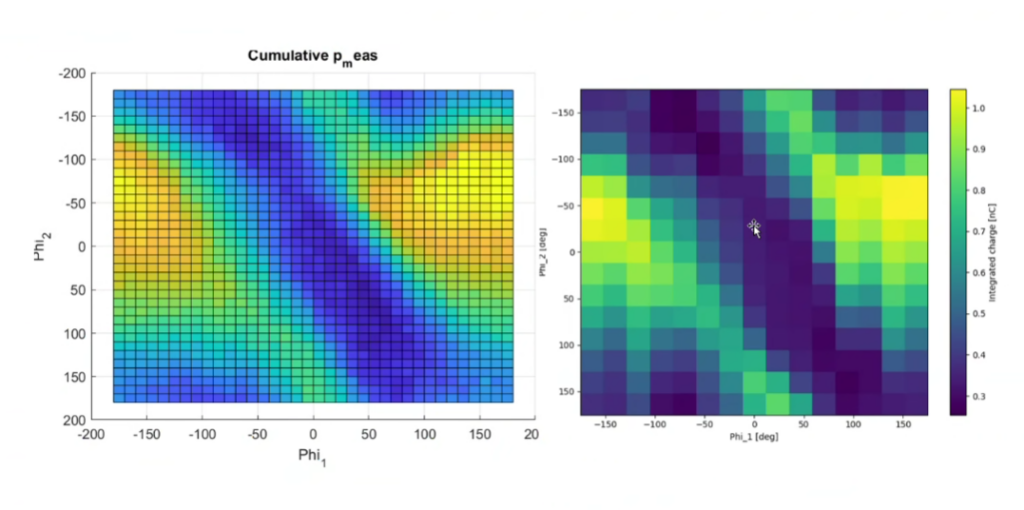
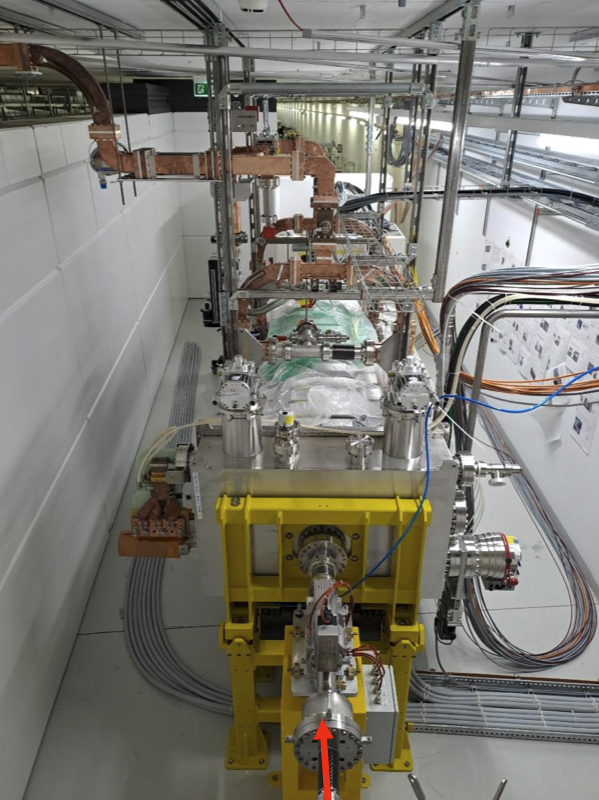
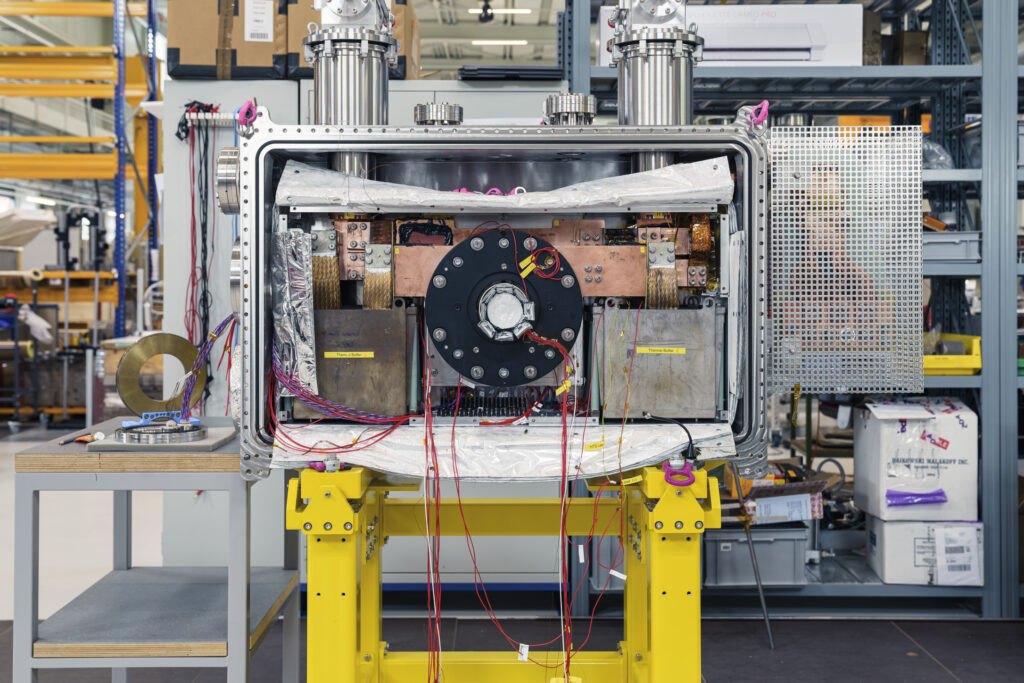
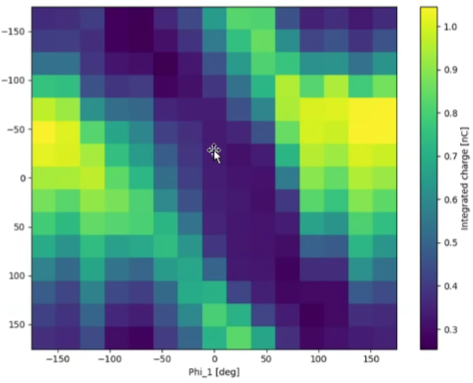
The PSI Positron Production (P-cubed or P3 ) experiment, framed in the FCC-ee study, is a demonstrator for a e+ capture system with potential to improve the state-of-the-art e+ yield by an order of magnitude. The experiment’s commissioning was started in July and on July 28 the integrated positron charge shown below was recorded, with model predictions on the left, and recorded data on the right.
The initial results are very encouraging and point towards confirming the possibility of achieving an exceptionally high yield and fully meeting the FCC specifications, leading to lower-energy impinging electron beams and a more robust target design for the FCC-ee injector.